Listen to Women

Listen to Women

Stories

What you need to know:

  • Nine out of 10 women in Kenya die as a result of poor quality of care during pregnancy and delivery.
  • We plan projects, talking of inclusivity but, more often than not, we never include the women’s and citizens’ needs and ideas in them.
  • Women and girls must be key stakeholders like all others — policymakers, health workers, academia, private sector and civil society groups.

Thursday, April 11, was the International Day of Maternal Health and Rights. The World Health Organization (WHO) set aside this day every year to bring to the attention of everyone the plight of women and girls and as a call to action to address a woman’s right to high-quality, respectful care before, during and after pregnancy.

ESSENTIALS

Also on this day, Kenya launched the “Lancet Global Health Commission on High Quality Health Systems in the SDG Era” — a ground-breaking report that stresses the need for high-quality health systems that optimise health by consistently delivering care that improves or maintains health, being valued and trusted by all people and responding to changing population needs.

When I graduated from the University of Nairobi a few years ago, I was full of joy, knowing that I was going to deliver babies and bring the much-anticipated joy to mothers and their families.

But this was not to be: I witnessed more deaths than I ever imagined in the health facilities in hard-to-reach areas in Kenya, South Sudan and elsewhere in Africa.

I cried most nights. We were few workers and the health system was broken down. We had no lights at night, no running water, no blood banks, no ambulance, not even gloves or other basic essentials that we often take for granted. Here I was, trusted to save lives, but unable to save much!

I was heartbroken.

Then there was the culture that women were not allowed, or given the opportunity, to be heard when they visited health facilities. Besides, the services that they received were basically routine — to be seen, palpated, delivered of their babies and discharged.

FRONTLINE

They were passive recipients of care with no right to information, to question or to contribute to their healthcare.

They were rural women with little or no education to question our competency. I doubt if they even knew they had the right to healthcare.

It was at that point that I decided maybe, just maybe, if we had more frontline health workers it would make a difference. I became a trainer. I started training and upgrading programmes to improve skills and competences for frontline health workers. Through eLearning, midwives did not have to leave their clients as they studied.

I published a policy voice, Nursing the Future, eLearning and Clinical Care in Kenya, to share lessons and experiences with institutions and adopt this model of training.

Over the past decade, I have read the most beautifully written reports about the numbers of women and newborns dying everywhere from preventable causes.

It’s only last year that the Ministry of Health launched one of the most heartbreaking reports, “The Confidential Enquiry into Maternal Deaths in Kenya”, which stated that nine out of 10 women in Kenya die as a result of poor quality of care during pregnancy and delivery.

Over time, I have heard in various forums that we must create demand for services for the women and citizens to utilise. But what we often mean is that women and citizens should utilise services offered, no matter how poor the quality.

SCEPTICISM

We plan projects, talking of inclusivity but, more often than not, we never include the women’s and citizens’ needs and ideas in them.

Women and girls must be key stakeholders like all others — policymakers, health workers, academia, private sector and civil society groups. We should not continue to force poor quality services on women and girls, and people in general, without listening to them.

For close to a year, I have led the collection of voices for What Women Want, a campaign that sought to hear from women and girls their definition of quality healthcare. There has been both a sense of wonder, some scepticism and deep appreciation that they are even being asked this simple, yet profound, question: What is your top priority for quality reproductive and maternal healthcare services?

What is the answer to this? The Lancet report, more so its “People’s Report” recommendations, is very important. But we have seen equally compelling reports go nowhere.

Our country has embraced universal health coverage as a key pillar in the ‘Big Four Agenda’. Underlying UHC are basic principles of equity and quality, both critical for quality health outcomes if the UHC investments are to be realised.

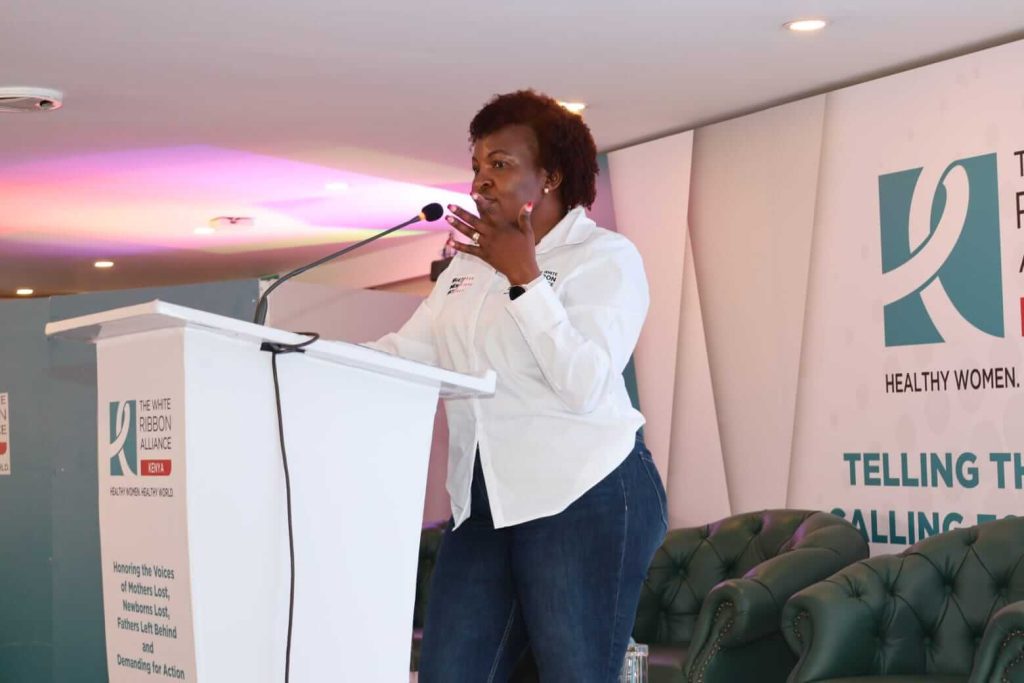
Ms Nguku, the founder and executive director of White Ribbon Alliance for Safe Motherhood in Kenya, is a People Voice Advisory Board member of the Lancet Commission on High Quality Health Systems in the Sustainable Development Era. angelkatusia@gmail.com

Related posts

Leave the first comment

x

Wra Kenya

White Ribbon Alliance Kenya (WRA Kenya) is a people-led movement for reproductive, maternal, and newborn health and rights. We advocate for women’s and girls’ voices and demands to lead change at the local, national, and regional levels and contribute to shaping the global reproductive, maternal, and newborn health (RMNH) agenda.


Re-Igniting the Inherent Power in Women and Girls through Advocacy and Action

We deeply believe in advancing the self-articulated needs of women and girls through advocacy to shape policies, programming approaches and strategies. This is aimed at amplifying women, girls and newborn’s voices, and agency, to actively participate in decision-making processes in public, private and civic spheres. We provide our action networks with the right tools, and trainings, to broaden the reach and efforts and realize a lasting change.

LEARN MORE

x

Portfolio

I am Angela Nguku, a midwife, an ICF certified leadership and mindset coach, an advocate, an author, and a movement builder who turned silence into action.

I founded White Ribbon Alliance Kenya to center the voices of over 3.5 million women and girls who have boldly told us what they need for quality reproductive, maternal, and newborn health and wellbeing. We are not just documenting their needs. We are acting with them to address the intersecting issues that go beyond health. These include access to economic power, education, information, clean water, sanitation, dignity in care, among others.

I also founded AudaciousHer, a coaching and leadership platform for women and girls who are done shrinking to fit into broken systems. Through mindset coaching, storytelling, and bold spaces, we support them to reclaim voice, unlearn silence, and lead from a place of truth.

A powerful part of this work is coaching African frontliners — the community midwives, justice defenders, grassroots organizers, and policy disruptors who carry entire systems on their backs while navigating burnout, backlash, and broken institutions. They are the shiftmakers. AudaciousHer provides them with space to breathe, reflect, and lead differently, not just as responders, but as visionaries shaping new futures.

I’ve stood in delivery rooms where dignity was missing. I’ve sat with mothers who’ve buried their dreams and their children. I’ve walked into rooms where inclusion was just performance, not power-sharing. But I also do this work because I’ve seen what happens when a woman is truly listened to. She doesn’t just speak. She moves systems.

x

AUDACIOUSHER

For African Women and Girls Who Lead Without Permission

Our Story

I know what it feels like to grow up silenced, taught to keep quiet, defer, and disappear. But silence doesn’t keep us safe. It keeps us small. Across Kenya and Africa, too many women and girls are still raised in that silence. Only 15 percent of girls in Kenya feel confident speaking in public or participating in decisions that shape their lives. This trend mirrors a wider pattern across the continent, where cultural norms and systemic barriers continue to stifle voice and power.

I founded AudaciousHer in 2024 as a bold, African rooted coaching and leadership platform. We walk with women and girls reclaiming their voices. From adolescent mothers to midwives, movement builders to market women. Whether you’re restarting, reinventing, or rising, you’ll find truth, strategy, and sisterhood here.

Our Promise

We don’t just talk growth. We walk with you through it. Mess, truth, clarity, and all.
We build spaces where bold, brave, and unstoppable women and girls rise, speak, and lead without apology.

Our Programs

Coaching For Africa’s Frontliners

One on one and team coaching for women and girls holding broken systems together. This includes midwives, nurses, justice defenders, and youth advocates. Grounded in lived experience, these sessions help restore clarity, courage, and care.

Mentorship & Courage Circles

Small group coaching and safe truth telling spaces for mid career reinvention, healing, and reclaiming power. Women and girls come to reconnect with who they are. Without shrinking.

Shiftmakers Series

A storytelling platform that honors real African women and girls shaping change without applause or performance. From adolescent mothers to market traders and quiet policy influencers, their stories ripple.

Early Fire

Too many African girls are taught to shrink before they’re ever taught to speak. AudaciousHer creates bold, safe spaces where girls both in and out of school can unlearn silence early, name their voice, and step into power before the world teaches them fear.

Audacious Convenings

Because real change starts with what we are brave enough to say out loud.
We do not moderate to keep the peace. We moderate to move the room. These are not polite panels. They are bold, truth filled sessions where power is questioned, silence is named, and clarity becomes action.
Whether it is in a boardroom, a village hall, or a global summit, we hold space for what matters. We convene with purpose, ask the uncomfortable questions, and turn conversations into strategy.

LEARN MORE