What do adolescent mothers want for their reproductive health care in Kenya?
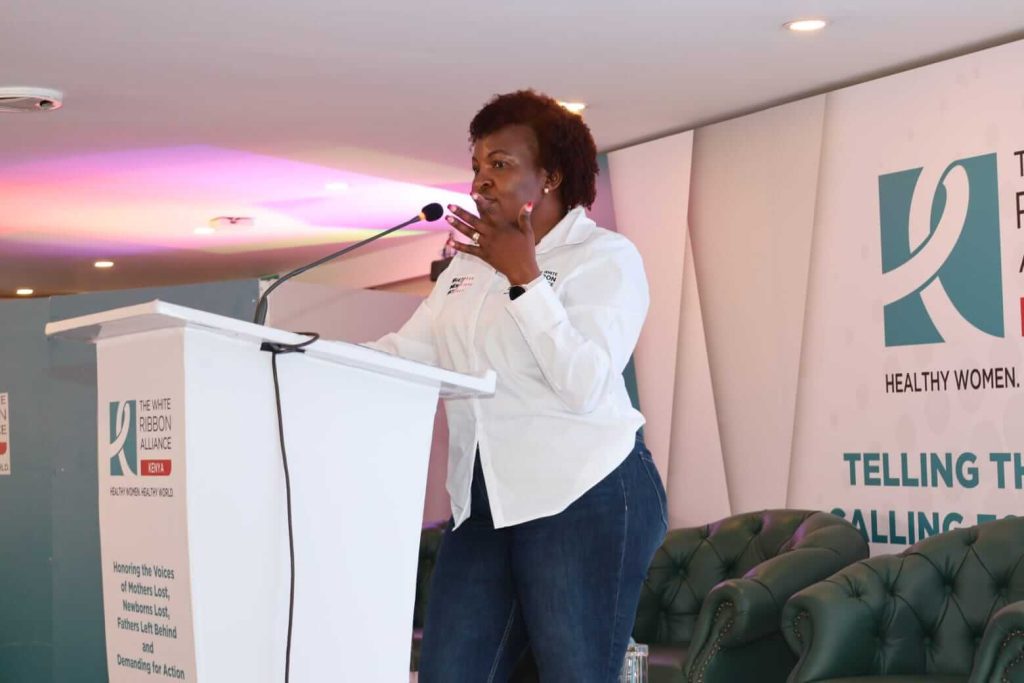
ArticlesA recent study in Kenya by African Population and Health Research Center (APHRC) and Miss Koch Kenya, documenting the challenges experienced by pregnant and childbearing underage girls in Korogocho (an informal settlement in Nairobi) that was recently released, has brought to light certain unpleasant truths especially around the reproductive health rights of adolescent mothers in the country. This study comes at the backdrop of other recent surveys undertaken by White Ribbon Alliance for Safe
Motherhood Kenya, a women led movement for reproductive maternal and newborn health that sought to understand what adolescent mothers want for their reproductive health care. These surveys are unique in that they are more of listening sessions as the respondents share their own definition of quality and respectful reproductive health care. The adolescent mothers’ self-articulated needs were far from the truths of what many players in the field define as the real needs of adolescent mothers, who are in most instances lumped together with older parenting women or non – pregnant adolescents.
The World Health Organization (WHO) defines adolescent pregnancy as one occurring in a female aged 10-19 years. Approximately 12 million adolescent girls aged 15-19 years and 2.5 million girls aged less than 16 years give birth while nearly 4 million girls undergo unsafe abortions each year in low and lower-middle income countries (LMICs) such as Kenya. In many LMICs, adolescents seek care later in pregnancy, are less likely to seek and obtain skilled childbirth, initiate breastfeeding early and exclusively breastfeed, use postnatal care services and have shorter birth intervals.

They are less likely to receive quality services with significantly fewer components of the antenatal care package. They have higher maternal, neonatal, and perinatal mortality and morbidity rates and their newborns are more likely to be born preterm and/or low birth weight. Babies born to adolescent mothers face a higher risk of early childhood undernutrition particularly stunting and wasting. The surveys above point to real reasons that worsen the health-seeking behaviors of pregnant adolescents.

Embodied under Sustainable Development Goal 3 (on Health and well-being) as one of its main targets i.e., Universal Access to Sexual and Reproductive Health and Rights- the United Nations Population Fund (UNFPA) defines sexual reproductive health rights as a state of complete physical, mental and social well-being in all matters relating to the reproductive system. In Kenya, like in other parts of the world, providing ideal reproductive health care is increasingly proving to be a serious challenge, one that will need a deliberate relook if we are to get back on track and ensure that we achieve the SDGs 2030 goal.
According to a survey by Guttmacher Institute, Adolescent women in Kenya aged 15–19 make up just over one-fifth of the female population and they account for 14% of all births. About 63% of pregnancies among adolescents in Kenya are unintended, and 35% of those unintended pregnancies end in abortion.
Yet, as significant and worrying as these statistics are or should be, access to reproductive health information and care in Kenya remains an elusive promise, especially for adolescent and young parenting women. Like a lot of other global issues, reproductive health rights are slowly- and to our loss – becoming boardroom jargon, going even as far as to acquire flowery boardroom lingo. They have also been marred by misinterpretation and misunderstanding, politics of whose agenda takes the day, among other issues; much to the detriment of those they are supposed to help if understood and protected.
Although Kenya’s legislation around reproductive health rights appears impressive on paper (for instance, the country through its constitution has ambitiously committed to provide appropriate social security to persons who are unable to support themselves and their dependents), practice on the ground shows gaps in Kenya’s reproductive health rights. All around the country, in varying capacities, violations of the right to reproductive health care of young adolescent mothers are frequently being reported

While big organizations, donors and corporate stakeholders continue to obliviously discuss these gaps in air-conditioned boardrooms, far removed from the reality, the real victims – that is, the adolescent and young mothers and their newborns – continue to bear the harsh reality of their lives. Despite their good
intentions, the results of these conferences and discussions rarely reflect on the lower levels where the real consequences of accessibility of such rights or lack thereof are felt, often because these adolescent and young mothers are rarely actually involved in them.
Across the globe, there has been a growing call and need to center such discussions around this group of adolescent women; to walk in their shoes and to know exactly where the shoe pinches. However, these calls have been around just ending adolescent pregnancy. Rarely do we have conversations around those adolescent mothers who are already pregnant or parenting young ones! These groups are almost if not always excluded in conversations, programming or even resourcing for.
So, what exactly do adolescent and young mothers in Kenya want in regard to their reproductive health rights?
In Kenya, Sexual and Reproductive Health for adolescent girls and young women is often if not always equated to sanitary pads and contraceptives
On the contrary, sexual and reproductive health has many elements to it as stipulated in the National Adolescent Sexual Reproductive Health Policy (2015) including but not limited to maternal and newborn health, menstrual hygiene, Sexual and Gender based violence (SGBV), which by the way, according to the 2022 Kenya Demographic and Health Survey (KDHS) about 40 percent of women experience in their lifetime – a figure that’s quite disturbing, to say the least. Other elements include harmful practices
such as female genital cutting, sexually transmitted infections, HIV and Aids to name just but a few.
Given that adolescent mothers are not homogenous and that their contexts are different, meaning that they have different needs at any one time; their definition of what
quality reproductive health care rights mean to them matters especially in the era of leaving no one behind; and ensuring that programming takes into consideration the lived
realities of the people we programme for.